For a BVI yacht charter, where the yacht is based and licensed can affect your pickup point, transfer plan, fees, and yacht shortlist. The guest-facing takeaway is simple: a yacht that looks perfect on paper still needs to be practical and compliant for the way you want to start, cruise, and finish your charter.
We explain this early because it saves clients from the most common planning mistake: choosing flights, start points, or a yacht before confirming whether the operation fits the charter route. This is especially important when guests fly into St. Thomas, want a USVI pickup, or are comparing BVI-based yachts with USVI-based or foreign-based options.
Quick Answer
- BVI-based yacht: usually the cleanest fit when the charter is mainly in the British Virgin Islands.
- USVI-based yacht: often attractive when St. Thomas flights are easier, but the BVI portion needs proper planning.
- Foreign-based or non-BVI yacht: may involve licensing checks, waiver rules, extra operating steps, or routing limits.
- Best broker move: confirm the yacht’s operating fit before flights, pickup points, and deposits are locked in.
| BVI-based | USVI-based | Foreign-based | |
|---|---|---|---|
| Best when | The week stays in the BVI | St Thomas flights are much easier | Rarely the starting point |
| Where you board | Tortola, Nanny Cay, Virgin Gorda | St Thomas | Depends on its permissions |
| Flights | Beef Island, or via St Thomas | Direct to St Thomas | Whichever the yacht allows |
| Paperwork | Built around BVI cruising | Clearance on the first day | Licensing and waivers to check |
| The catch | Reaching Tortola takes a step more | The BVI part needs planning | Limited charters per year |
Why This Matters to Charter Guests
Most guests do not care about vessel licensing for its own sake. They care about whether the yacht can pick them up where they land, whether the itinerary works, and whether extra costs or delays appear later.
In our experience, this topic matters most in 5 practical areas:
- where the yacht can pick up and drop off guests
- whether guests should fly into St. Thomas or Tortola
- how customs, immigration, and vessel clearance fit into the first day
- whether extra operating costs or fees apply
- which yachts your broker should realistically shortlist
If you are choosing between 2 similar yachts, the easier operational fit can be the better charter choice. A slightly less flashy yacht that starts cleanly and avoids routing friction can create a smoother first day than a more complicated option.
BVI-Based Yachts
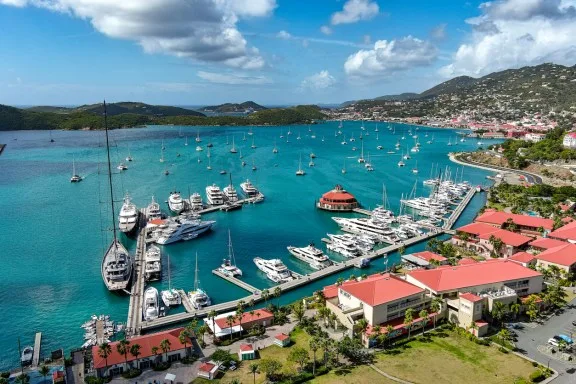
A BVI-based yacht is usually the simplest choice for a BVI-centered itinerary. These yachts are commonly positioned around Tortola, Nanny Cay, Village Cay, West End, or other BVI operating points, and their crew, paperwork, and charter rhythm are typically built around BVI cruising.
We usually like BVI-based yachts when the client wants the classic BVI week: short hops, easy swim stops, protected anchorages, and a relaxed route through places like Norman Island, Jost Van Dyke, Virgin Gorda, Anegada, and the North Sound.
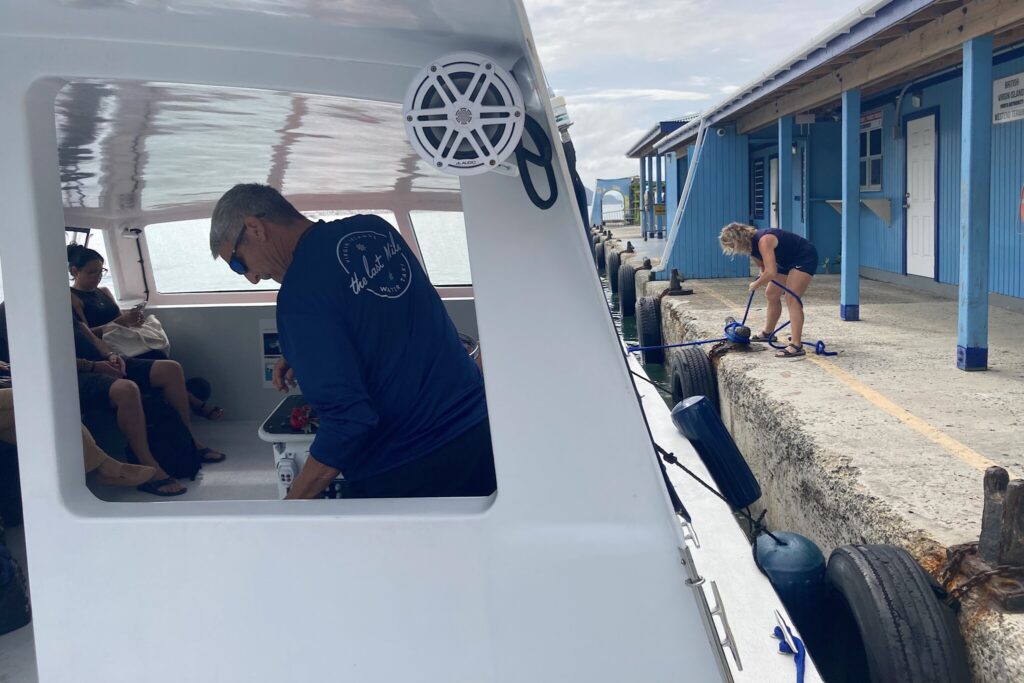
The main tradeoff is flight convenience. Some guests can fly directly into Beef Island, but many still find better airlift into St. Thomas. In that case, the yacht may still be BVI-based, while the guests use a ferry or private water taxi to reach the yacht.
USVI-Based Yachts
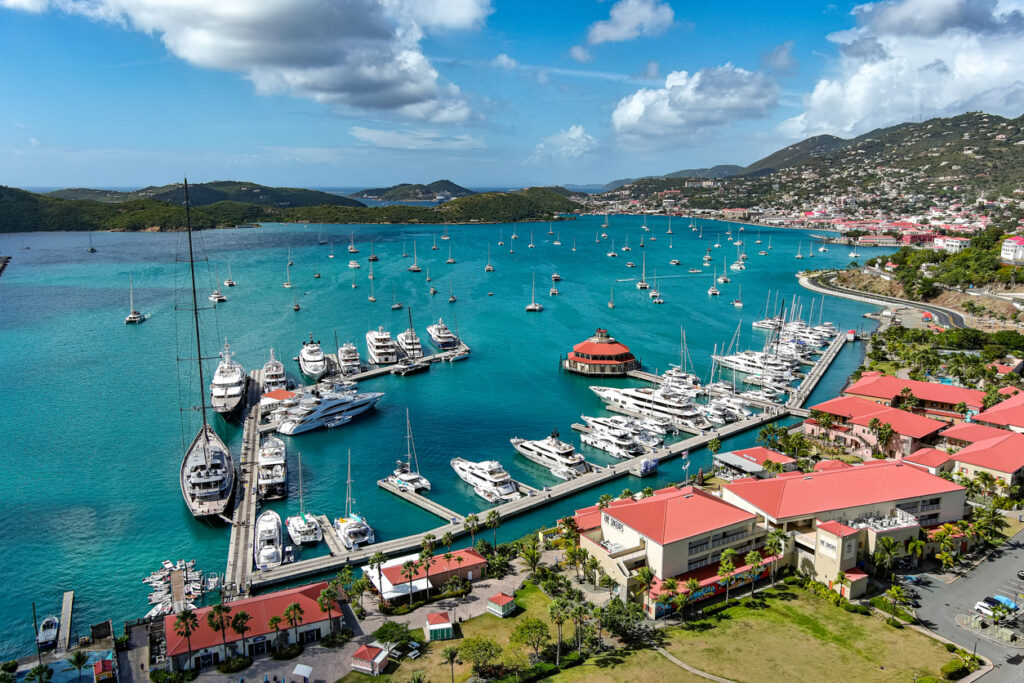
A USVI-based yacht can make sense when St. Thomas flights are the priority (see how combo weeks and crossings actually work). For many American guests, STT is easier than connecting into Tortola, and the idea of boarding the yacht close to the airport is naturally appealing.
The important question is not only, “Can we start in St. Thomas?” It is, “Can this specific yacht run the BVI charter we want in a compliant and practical way?”
For some groups, a USVI start is a good solution. For others, transferring to the BVI before boarding is cleaner. It depends on the yacht, the crew’s operating setup, the route, the dates, and the current clearance requirements.
If your group is flying into St. Thomas, read our guide to where to start your BVI yacht charter: USVI pickup or transfer to the BVI. That decision is often more important than guests expect.
Broker insight
There are fewer and fewer yachts that can start in St. Thomas. If you do get picked up there, you are spending some of your charter time doing customs at either end, sometimes a few hours. You are mainly just on the boat having a cocktail while the captain sorts it out, but you are missing time on charter. If you make that crossing on a ferry or a water taxi instead, you are not losing any of your actual golden charter time.
 John Boullin
Charter Broker
John Boullin
Charter Broker
Foreign-Based or Non-BVI Vessels
Foreign-based or non-BVI vessels need more careful checking. The point is not that they are automatically wrong for a BVI charter. The point is that the operating permissions, waiver rules, and paperwork can affect whether the charter works the way the guest imagines.
The Government of the Virgin Islands’ commercial recreational licensing guidance notes that foreign boats are allowed a limited number of charters in a registered year and that licensing documents must be kept on board. A government notice from October 16, 2025 also explains that, after rule changes effective June 1, 2025, non-BVI vessels may be granted waivers under specific conditions, including limits on duration and frequency.
For guests, this means your broker should confirm the yacht’s real operating status before you rely on a quote or itinerary. If a yacht needs a waiver, inspection, special clearance, or a different start plan, you want to know that before flights and deposits are locked in.
What “BVI Legal” Usually Means in Practice
When brokers say a yacht is “BVI legal,” they usually mean the yacht is properly set up to operate a charter in BVI waters under the rules that apply to that yacht. That may include licensing, registration, authorization, insurance, trade-license documentation, or other paperwork depending on the vessel and operating company.
For guests, the practical question is narrower:
- Can this yacht legally operate the charter dates and route we want?
- Can it pick us up where we want to board?
- Will the start involve extra customs, ferry, water taxi, or clearance steps?
- Are there extra costs that should be included in the quote?
- Is there a simpler yacht option that avoids this friction?
We prefer to answer those questions before presenting a final shortlist, because it keeps the search focused on yachts that are not only beautiful, but workable.
How This Changes Your Start Point
The start point is where most guests feel this issue first. A BVI-based yacht may be easiest to board in Tortola. A USVI-based yacht may look easier from St. Thomas. A Virgin Gorda or North Sound start can be excellent, but it makes transfer planning more important.
We usually look at 3 things:
- Flight arrival time: late STT arrivals can make a same-day BVI transfer stressful or impossible.
- Charter start location: Tortola, St. Thomas, and Virgin Gorda each create different timing and clearance steps.
- Yacht operating fit: the yacht’s base and permissions may make one start point much cleaner than another.
If you are transferring from the USVI, our USVI to BVI water taxi guide is a useful next read. If paperwork is the concern, start with our BVI entry requirements guide for yacht charter guests.
Broker insight
The ferry is around $100 return per person, with essentially 3 main crossings a day: morning, midday, and afternoon. The last time I booked a water taxi for a client, it was around $800 one way plus about $50 to $60 per person in BVI clearance fees. If you can find the extra budget for it, they hand you a fresh drink, cruise straight across, take you through customs, and drop you directly at your yacht.
John Boullin
Charter Broker

How We Use This When Shortlisting Yachts
We do not treat base and licensing as an afterthought. We use it as a filter before the shortlist gets too emotional.
For a BVI charter, we check:
- where the yacht is based for your dates
- whether the yacht is set up for the pickup and drop-off you want
- whether the route crosses between USVI and BVI waters
- whether the yacht’s fee structure changes because of the start point
- whether a transfer would be smoother than forcing a pickup
- whether another yacht gives you the same guest experience with fewer logistics issues
This is also why the best yacht on paper is not always the best yacht for your trip. The right yacht is the one that fits your group, your budget, your dates, and the way you actually need to arrive.
Our Recommendation
If your goal is a classic BVI charter, start with yachts that are operationally clean for the BVI and then compare layout, crew, price, and style. If St. Thomas flights are much better for your group, ask your broker whether a USVI pickup or a transfer into the BVI is the smarter move.
The best answer is rarely “always start here” or “never use that yacht.” The better question is: which yacht gives this group the smoothest total trip, from airport arrival to final drop-off?
If you want help choosing between a BVI-based yacht, a USVI-based option, or a yacht that needs extra checking, we can help you sort the practical details before you commit.
People also ask
Can a BVI yacht pick us up in St. Thomas?
Sometimes, but not always. It depends on the yacht, its operating setup, the charter route, and the rules in place for that specific situation. We check this before recommending a St. Thomas pickup.
Is it better to fly into St. Thomas or Tortola?
It depends on your flight options and yacht start point. St. Thomas often has stronger airlift, while Tortola can make the BVI arrival more direct once you land. The best answer is the one that matches your yacht and arrival time.
Does this affect the charter price?
It can. Transfers, relocation, customs steps, port fees, cruising fees, or special operating requirements can change the real cost. This is why we prefer to compare yachts based on the full trip setup, not only the weekly charter fee.
Can we cruise both the USVI and BVI in one trip?
Often yes, but it should be planned deliberately. Crossing between territories adds clearance steps and can affect the route rhythm. For a 7-night charter, we usually avoid overloading the itinerary unless the yacht and schedule make it easy.









 iMessage
 WhatsApp