Quick answer: On a BVI catamaran charter with captain and chef, the captain runs the boat, the route and the moorings, and the chef runs the galley and most of the guest service. Most crewed BVI catamarans charter all-inclusive, so the weekly rate covers the crew, the chef’s meals, the standard bar, fuel for a normal BVI itinerary and the moorings on the captain’s normal plan, and some listings include BVI cruising permits and customs fees too. Crew gratuity, premium bottles, meals ashore and travel stay extra. That differs from the usual Mediterranean model of a base rate plus an APA: on an all-inclusive BVI catamaran the weekly rate already covers the boat, crew, food, standard bar and normal fuel, with the extras below on top. Not every BVI yacht charters this way, so check each listing. The biggest choice is the crew size: our crew guide calls a third crew member the single most important upgrade, and in our broker Chris de Kock’s experience adding one to a boat that allows it can be around $2,000 per week.



How we made this list: The seven points follow the week, from who is aboard to what it costs, with the crew-size decision last. The boats named are examples from our BVI listings, not a ranking.
- 1. Two crew is the classic BVI setup, and three is the upgrade
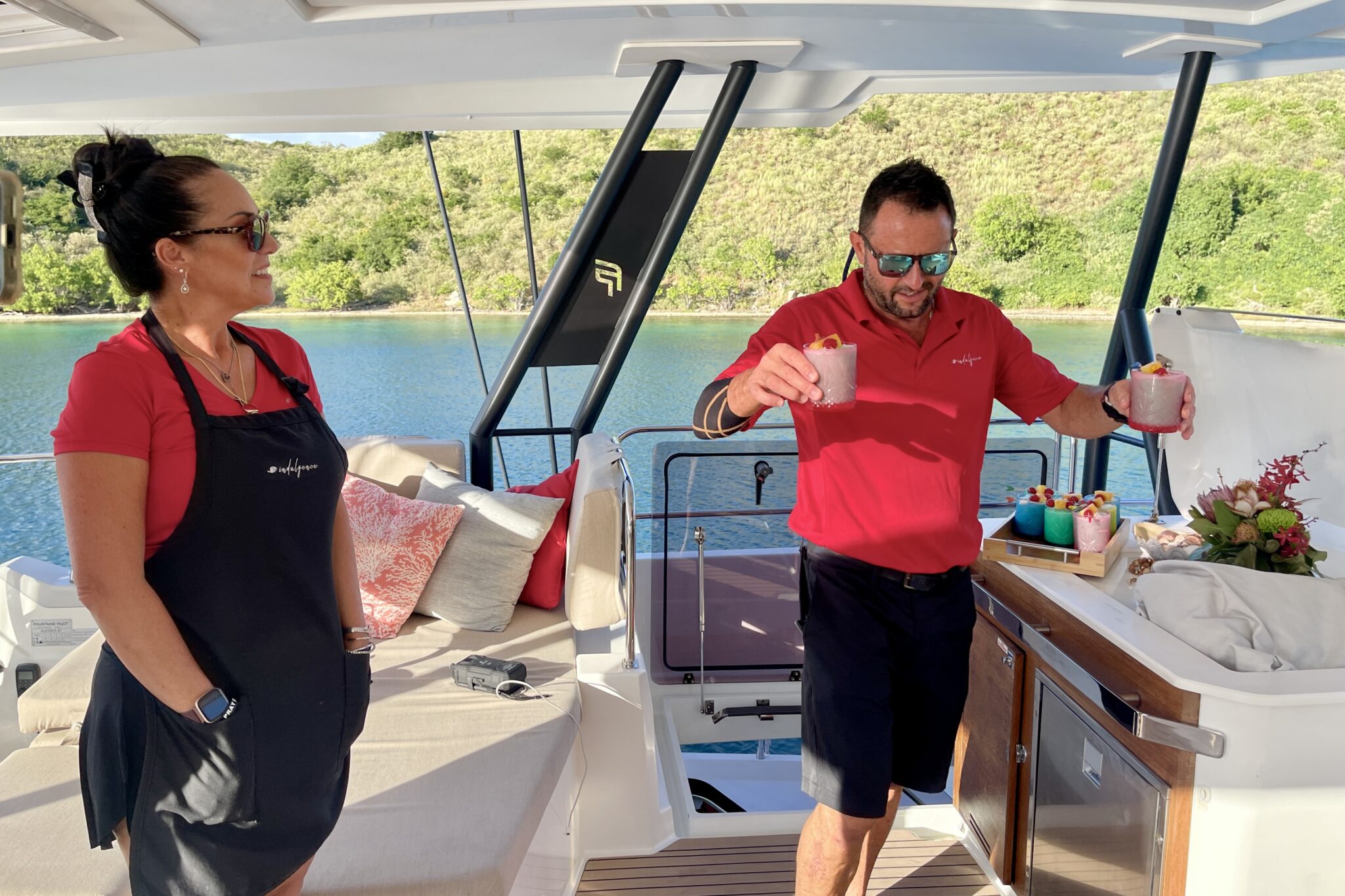
- 2. The captain runs the boat and the day
- 3. The chef runs the galley, and most of the rest
- 4. The menu starts with your preference sheet
- 5. The weekly rate covers the food, the bar and the fuel
- 6. Some things stay extra
- 7. A third crew member is the upgrade worth pricing
Last updated: October 31, 2026.
1. Two crew is the classic BVI setup, and three is the upgrade
A captain and a chef has long been the BVI standard. It is the minimum for a charter to count as crewed, and it still runs nearly half of our BVI fleet. Our recommendation goes further: 3 crew is the single most important upgrade, 4 is better, and more catamarans are adding a third crew member. Section 7 covers the choice.
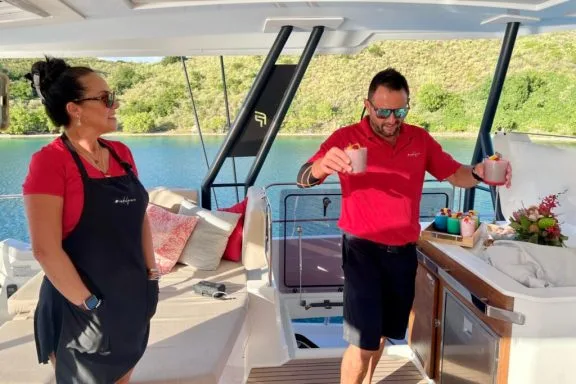
As Chris de Kock puts it: on a fully crewed charter you are a guest; on a captain-only charter you are the crew. With a chef aboard, the provisioning, cooking and dishes are not yours.
We confirm the captain and chef for your dates when you inquire.
2. The captain runs the boat and the day
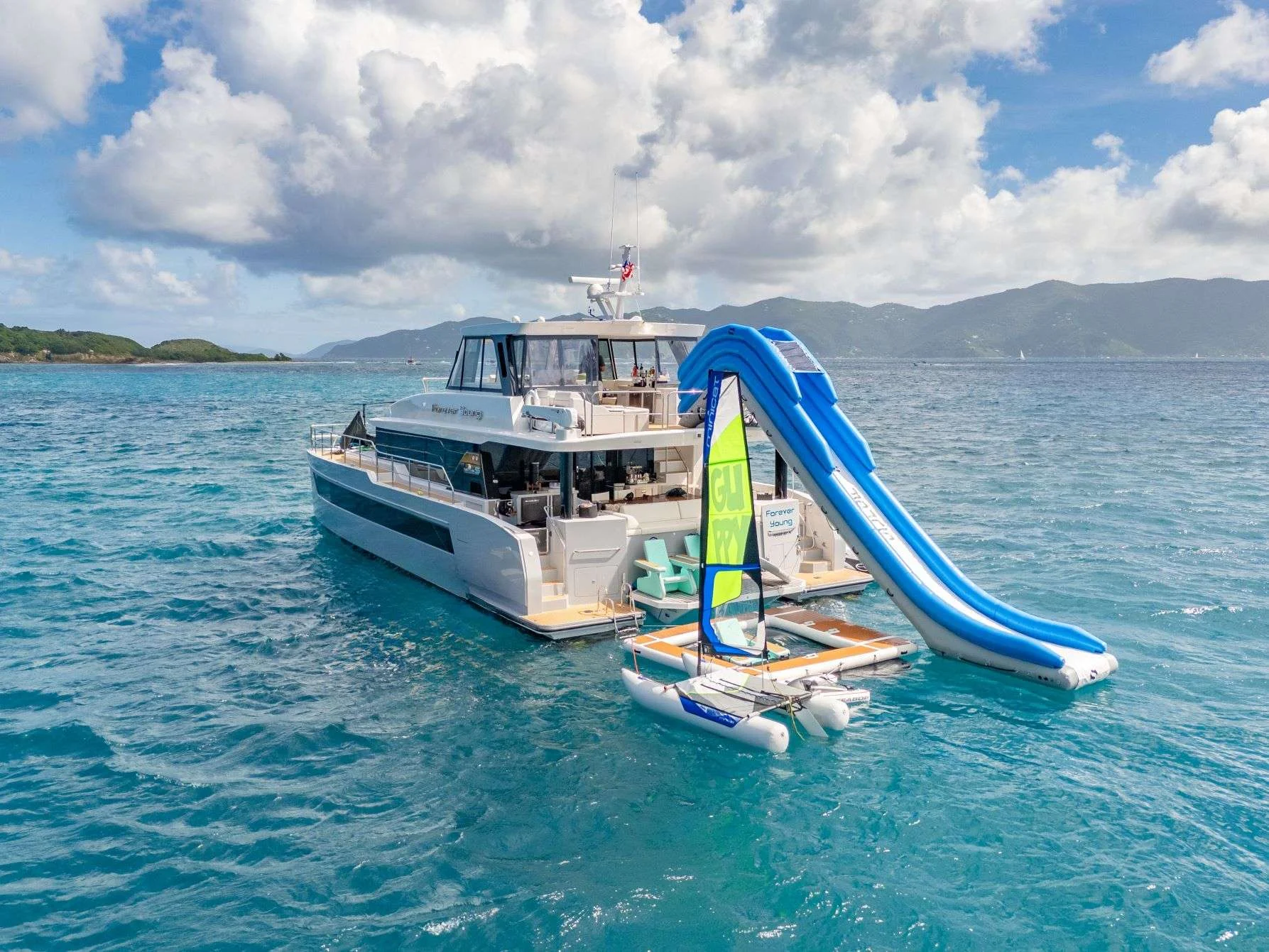
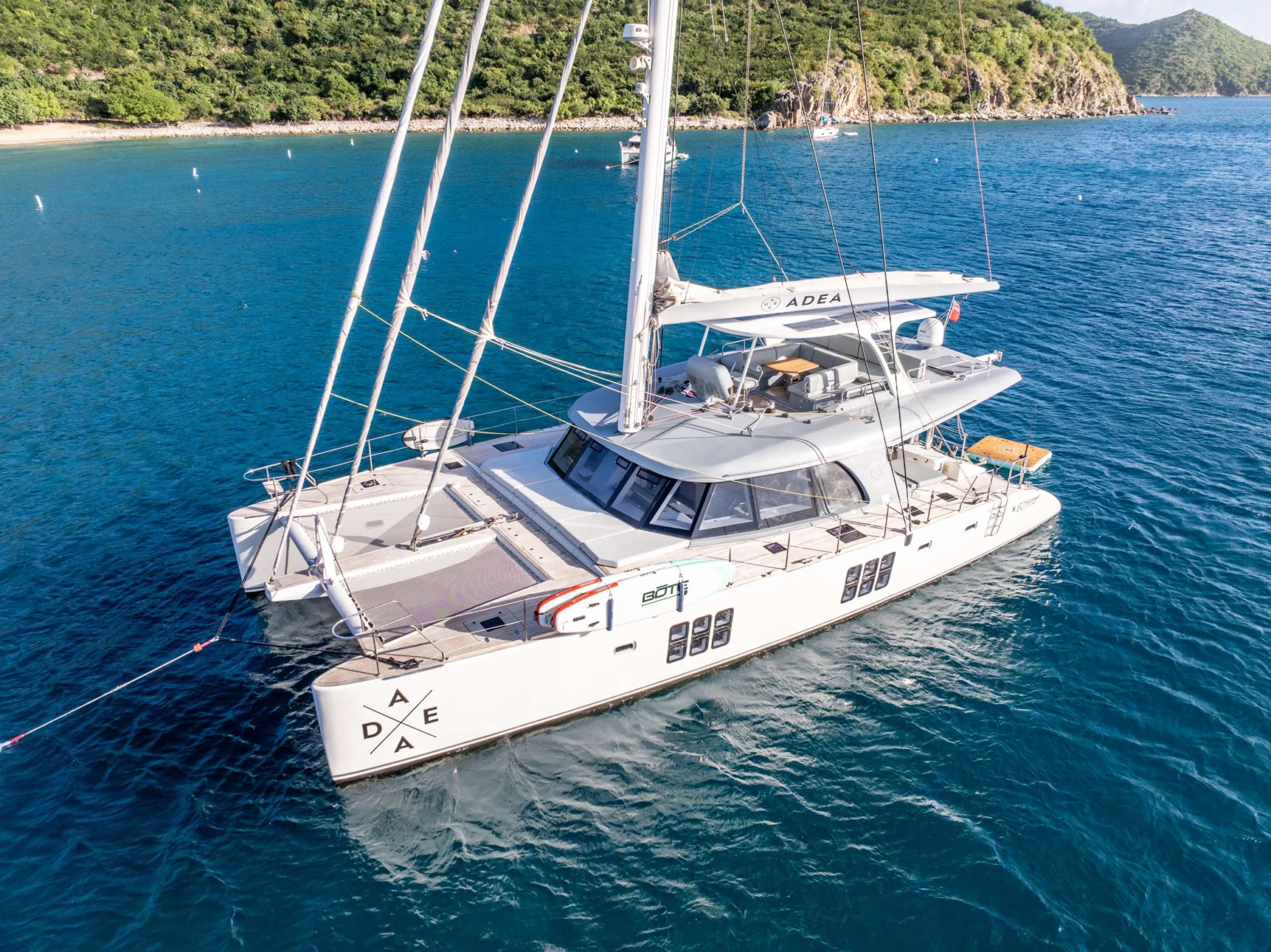
The captain decides what you cannot: where the boat anchors, when it moves, and whether the weather allows the plan. On FOREVER YOUNG, HEAVENLY and ADEA the listed licences are a USCG 100 Ton, a USCG Master’s licence and an RYA/MCA Master 200gt. FOREVER YOUNG’s listed captain has more than a decade in the greater Caribbean.
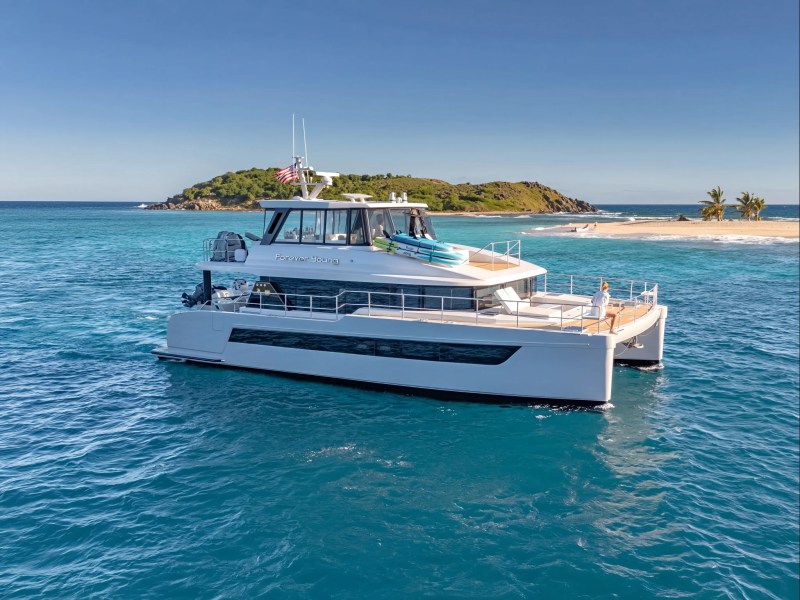
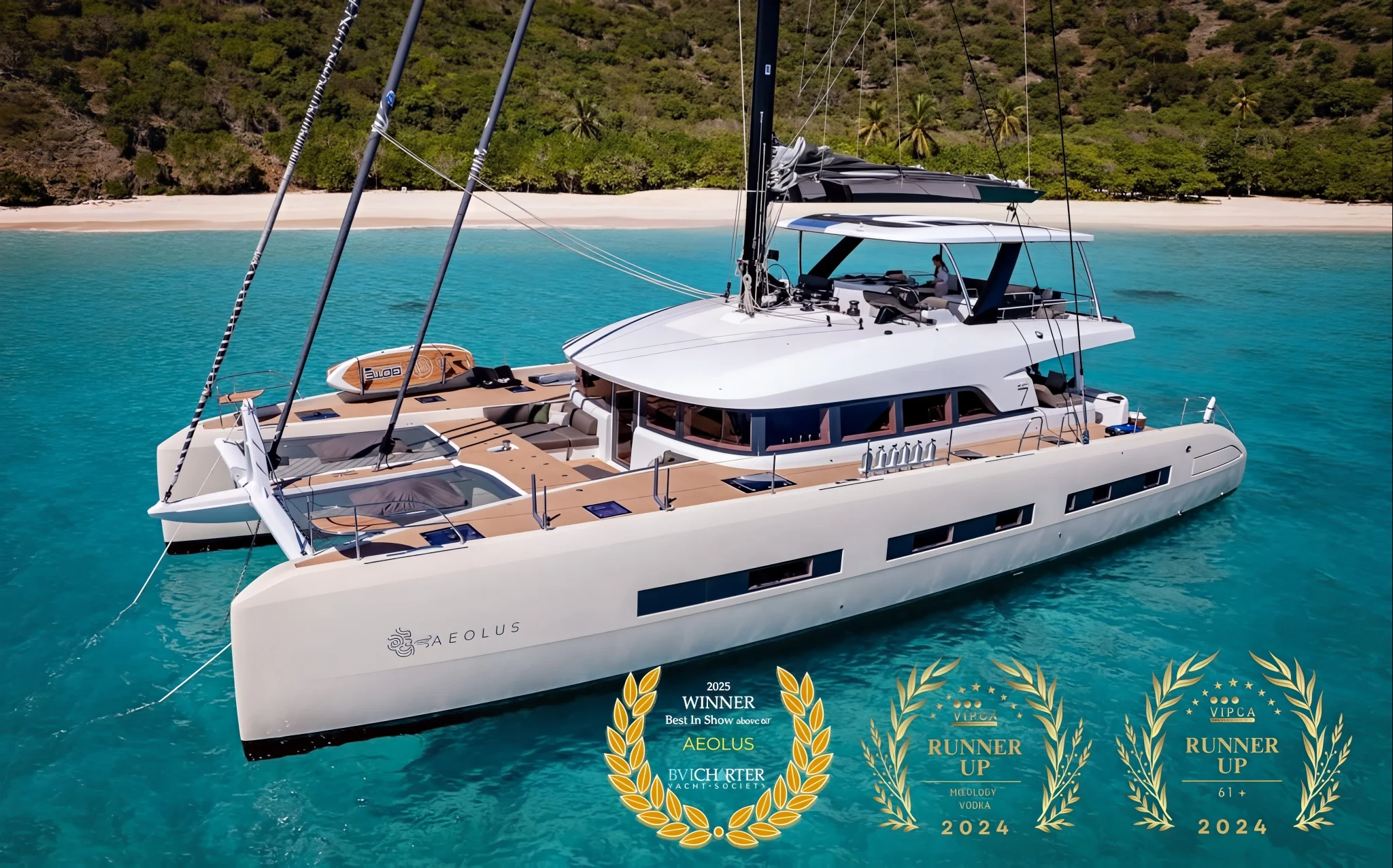
The captain plans each day around weather and timing; AEOLUS 77’s listing puts the focus on quiet anchorages and easy logistics.
The captain handles the moorings. Almost every BVI anchorage has a mooring field, so evenings end on a ball in a calm bay.
Inside the Sir Francis Drake Channel the hops are short, often under an hour, in water the islands shelter from the open Atlantic swell. Runs outside the channel are more exposed, and the captain times them by the weather.
Some captains hold a second qualification. On ADEA the captain is a certified Dive Master. On AEOLUS 77 the captain is a PADI scuba instructor.
3. The chef runs the galley, and most of the rest
On a 2-crew boat, the chef covers what the captain does not.
Breakfast, lunch, dinner and snacks. Drinks. The table set. Cabins tidied during the day.
The chef is not also a full-time stewardess. On 2 crew, expect cabins tidied during the day rather than a hotel-style reset, and meal times set around the galley. A good 2-crew team runs this smoothly.
How a day actually runs
The captain picks the anchorage. You say what you want from the day, a beach, a snorkel, a quiet bay, and the captain matches it to the wind and swell. Weather beats the plan.
The crew are not on duty around the clock. They work long days, and they also eat, sleep and take a break. Ask the captain the evening before for an early start or a late dinner, and the day is built around it.
4. The menu starts with your preference sheet
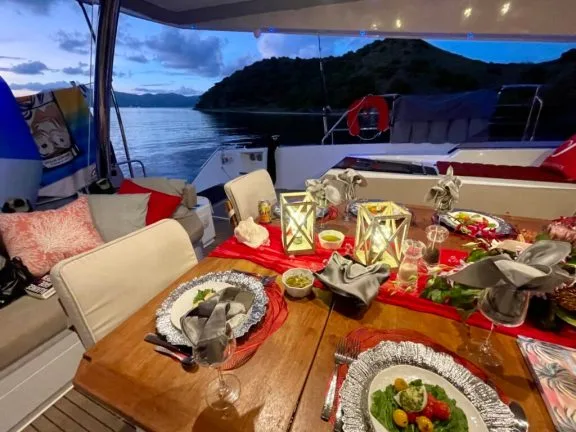
Before the charter you fill in a preference sheet, typically covering allergies, diets and what you like to eat. It is where the food gets decided, before you board. The chef shapes the week’s menu and the provisioning around it, so the more you put on it, the more the week is yours.
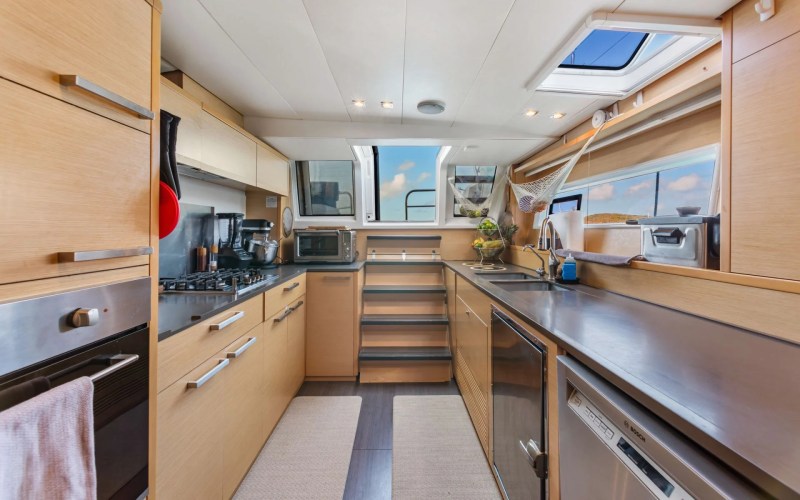
The sample menus on the listings show how differently the chefs cook. FOREVER YOUNG’s chef lists French-influenced menus with flavours from more than 40 countries: lobster eggs Benedict, Korean chicken bao buns, a raspberry pistachio Paris-Brest. HEAVENLY’s chef lists shakshouka, poke bowls and crab cakes, and the listing notes first place in rum mixology at the 2024 VIPCA Charter Yacht Show. ADEA’s chef cooks Mediterranean-leaning menus after a season as a chef in Greece.
FOREVER YOUNG’s chef handles vegetarian, vegan and gluten-free requests.
Some boats also let you choose a meal plan: full board, with every meal on board, or half board, with some lunches and dinners ashore at your own expense. Ask your broker what each plan covers and how the price changes.
If you plan to eat ashore often, ask about half board before you book.
5. The weekly rate covers the food, the bar and the fuel
Why all-inclusive works here: inside the Sir Francis Drake Channel the hops are short, nights are spent on a mooring ball or at anchor rather than in a city marina, and fuel use is small and predictable. In the Mediterranean, where fuel and marina berths vary widely week to week, most yachts charge an APA instead.
All five boats in this guide charter all-inclusive, with no APA, including FOREVER YOUNG, a power catamaran. Some crewed yachts, often motor yachts, bill expenses separately instead, so check each listing.
FOREVER YOUNG’s listing spells it out: fuel, food, drinks and standard running expenses are covered in the charter price, so no APA deposit is added.
On most all-inclusive catamarans that covers the crew, the chef’s meals, soft drinks, beer, house wine and standard spirits, fuel for a normal BVI itinerary, the moorings on the captain’s normal plan, and the water toys listed on the boat. If your route goes beyond a normal BVI itinerary, such as a USVI leg, raise it with your broker before booking. Our guide to BVI-based and USVI-based yachts explains what the start port changes.
Some of the boats here list BVI cruising permits and customs fees as included in the rate; others do not mention them. Permit and customs terms vary by listing, so ask which are included. Our BVI charter fees guide explains cruising permits, customs and moorings.
The full line-by-line list is in our guide to what is included in a crewed BVI yacht charter.
6. Some things stay extra
Crew gratuity. It is at your discretion, paid at the end. In the Caribbean, budget 15 to 20% of the charter fee you actually pay, against the 10 to 15% our tipping guide suggests in the Mediterranean. In the BVI it is figured on the all-inclusive price, so the same headline number brings a larger tip than a Med base fee would. As a round-number illustration, on a $40,000 per week charter that is from $6,000 to $8,000 per week. Work it out on the rate for your dates, not the from-price. Our guide to tipping crew in the BVI covers the etiquette.
Premium bottles. Rare wines, top-shelf spirits and special imported items cost extra. Put them on the preference sheet and ask for the price first.
Meals ashore. Dinners off the boat and spending ashore are yours. On a half-board plan, the meals ashore are paid by you, not provided by the yacht. Ask what half board changes in the price.
A sleep-aboard night. Some boats offer a paid night aboard before the charter; others do not. Ask your broker.
Government and park fees, where the listing does not include them. The BVI cruising permit is a flat year-round rate, not a seasonal one. It is set by law at $4 per person per day on BVI-based charter yachts and $16 per person per day on foreign-based ones, such as yachts based in the USVI. For 8 guests over 7 days that is $224 per week at the BVI-based rate and $896 per week at the foreign-based rate. The National Parks Trust permit for the day moorings at the Baths, the Caves, the Indians and the RMS Rhone is charged per boat for the week; our BVI charter fees guide quotes $25 per boat per week for up to 4 guests and $55 per boat per week for up to 10; confirm the current figure.
Moorings and marina nights outside the plan. The rate covers the captain’s normal mooring plan. A marina night you request, or a reserved ball outside that plan, can be extra, so confirm the terms for your boat.
Fuel beyond a normal BVI route. The rate covers a normal BVI itinerary. Longer runs outside it, such as a USVI leg on boats that allow one, can add fuel.
Diving. Scuba is usually run by an outside dive operator and paid separately. If diving matters, ask whether your boat offers dives aboard and what they cost.
Clearance for a USVI day run. Crossing to St John or St Thomas means clearing out of the BVI and into the USVI, and back. Ask your broker what the crossing adds for your boat; some boats do not run USVI legs at all. Our guide to BVI-based and USVI-based yachts explains how the start port affects your charter.
Travel. Flights, hotels, taxis, ferries and travel insurance. You can fly into St Thomas; for a start on Tortola, add the ferry, about an hour on the water.
7. A third crew member is the upgrade worth pricing
A third crew member is usually a stew, a role dedicated to service on deck and in the cabins.
Two crew: a lower rate on the same boat, and more privacy. One pair of hands covers the galley, the service and the tender, so the day runs at the galley’s pace.
Three crew: the stew runs service and cabins while the chef cooks, and the captain is free to run the tender while lunch is made.
Where the line falls: if service matters to you, start at 3 crew; it is the single most important addition you can make. For 8 guests we usually recommend 3, and above 6 guests some boats require a third crew member anyway. 2 crew still delivers a happy week for couples and small groups who eat ashore most nights. Your broker checks whether the boat can add one.
For a guest used to a Mediterranean motor yacht with four or five crew, a crewed catamaran is a different kind of week rather than a smaller one: short hops, a quiet ball at night, and a crew that is with you all day. 4 crew gives the full split of captain, chef, stew and deckhand.
It usually costs less than people assume: in Chris de Kock’s experience, adding one to a boat that allows it can be around $2,000 per week.
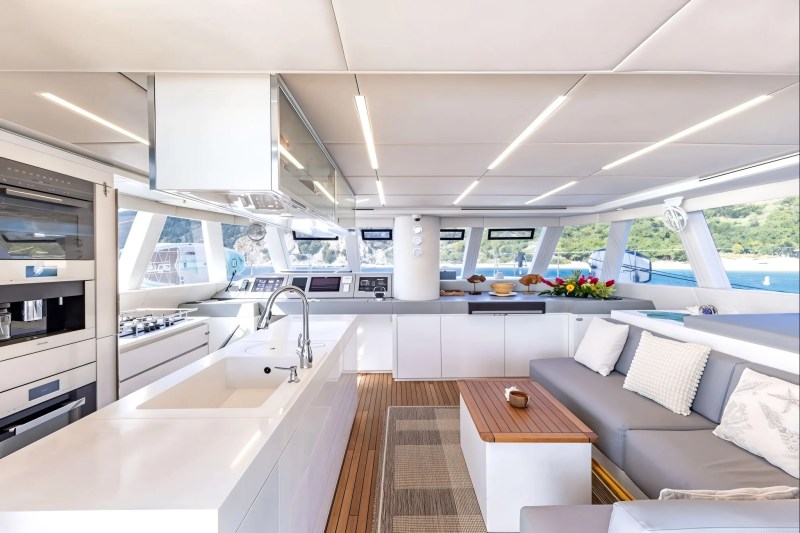
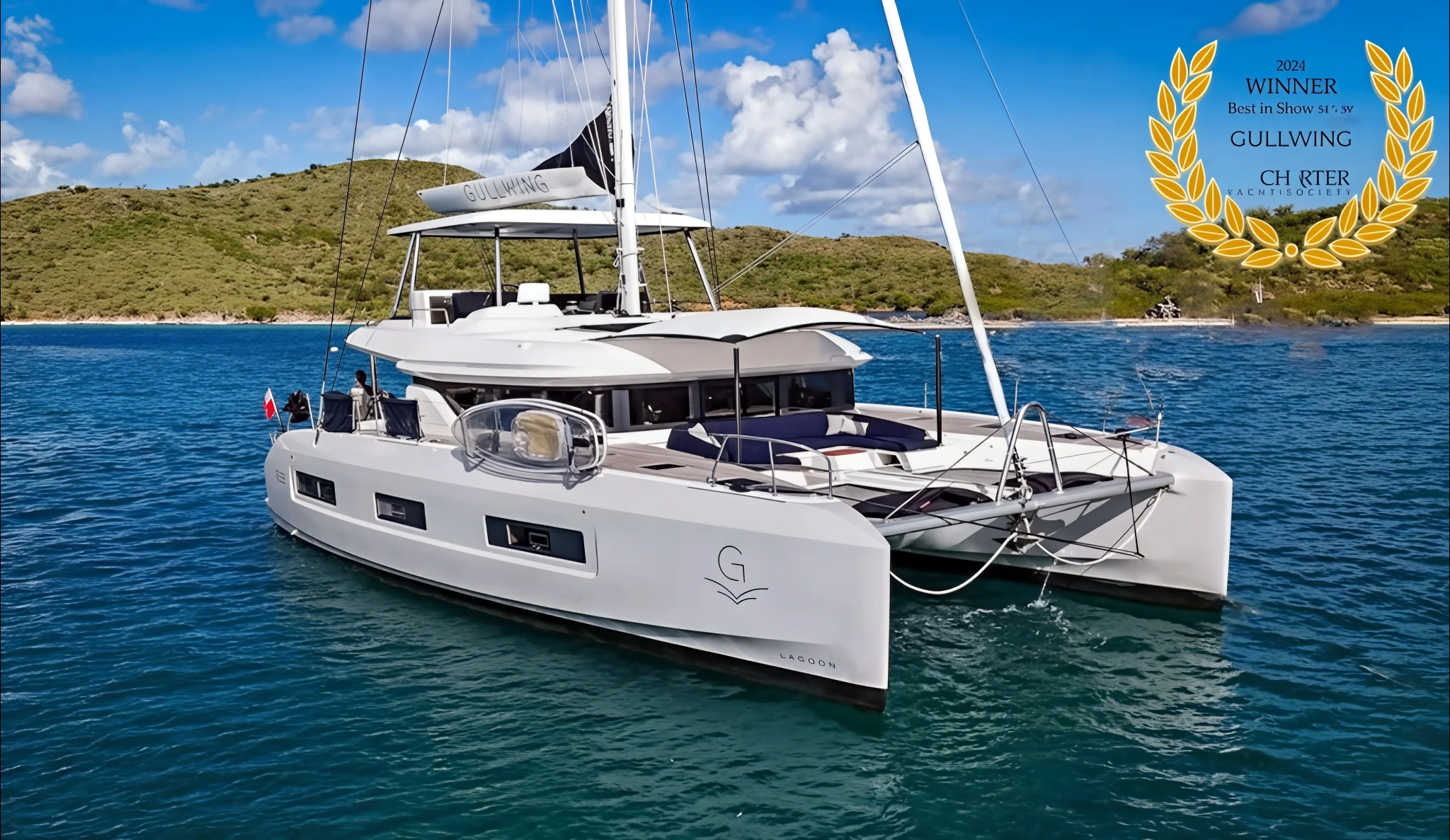
Some boats come with 3 crew already. ADEA is a 62 ft Sunreef for 8 guests. GULLWING is a 2024 Lagoon 55 for 8 guests.
The rules are boat by boat. On some BVI boats a third crew member is required above 6 guests, and some boats add one for the winter season. Crew size is also capped by crew cabins, and on some boats the fourth guest cabin doubles as a crew bunk. Crew rules differ by boat, so your broker confirms the crew for your group size and dates.
At the top end, AEOLUS 77, a 2024 Lagoon 77 for 8 guests, carries 4 crew. Her listing says the mate supports the water time and deck operations, and the stewardess keeps the interior organised, with bar and beverage training. Our guide to how many crew you need in the BVI walks through the choice.
If food decides it for you, start with our top 10 BVI catamarans for food-lovers, or browse every BVI catamaran charter on the site.
More BVI catamarans named in this guide
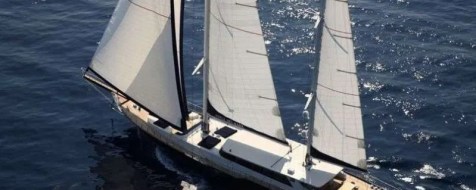
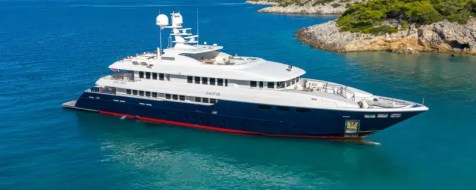
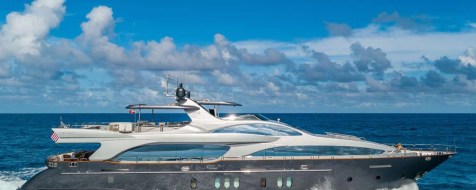
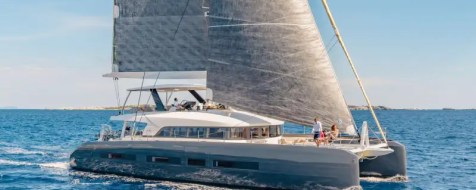
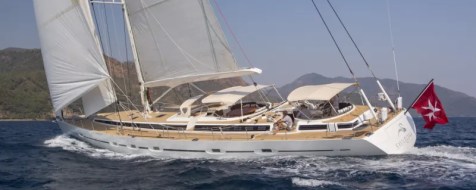
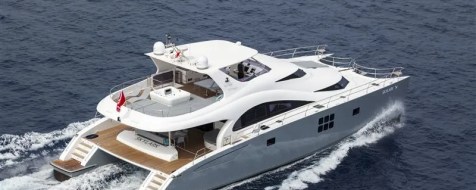
Cards for four of the five BVI catamarans named in this guide. All charter all-inclusive. From-prices vary with size, age, builder and season, so they do not compare crew sizes. We confirm the start port on inquiry.
Prices shown are listing snapshots dated October 31, 2026. Availability and the final weekly rate must be confirmed for your dates.
Frequently asked questions
Do the captain and chef sleep on board?
Yes. The captain and chef, plus a stewardess on larger yachts, live aboard for the whole trip in their own crew quarters, separate from the guest cabins. A catamaran listed with 4 guest cabins is rated for 8 guests. If you add a third crew member, check whether that person needs one of the cabins.
Can we sleep aboard the night before?
On some boats, yes, for a fee, with boarding in the late afternoon and dinner ashore at your own expense. Others do not offer it. Your broker confirms it for your boat.
Do we need to shop or cook on a crewed catamaran?
No. On a crewed charter the chef provisions the boat around your preference sheet and cooks. On a captain-only charter, provisioning, cooking and dishes stay with your group.








 iMessage
 WhatsApp